
Views: 0 Author: Site Editor Publish Time: 2025-09-09 Origin: Site


You have an important choice in veterinary imaging: CR vs DR. Many small animal clinics and busy hospitals use digital radiography. It provides you with images right away, and they look very clear. Computed radiography (CR) works well for clinics with fewer cases or less budget, while digital radiography (DR) is ideal for those looking for faster results. Picking the best imaging system helps your work go faster, enhances your ability to care for animals, and makes your business run smoother.
Digital systems give you pictures in just a few seconds.
You lower radiation exposure for animals and the staff working there.
You save money because you do not need film or chemicals.
You can easily keep and share pictures when you need assistance.
Think about what your clinic needs. Shinova offers excellent imaging tools that many veterinarians trust all over the world.
Digital radiography (DR) gives images right away. This is great for busy clinics that need fast results.
Computed radiography (CR) costs less for small clinics. It is flexible and needs less money to start.
Both CR and DR systems lower radiation for animals and staff. This makes veterinary practices safer.
Think about your clinic's needs, like how many patients you see and your budget, before you choose CR or DR.
Shinova gives good support and training for both systems. This helps clinics switch easily and use them well.
Computed radiography is a flexible and cheaper way to take x-ray pictures. A cr system uses a special cassette with a semiconductor plate inside. After you take the x-ray, you put the cassette in a reader. The reader scans the plate and makes a digital picture. Many clinics pick computed radiography because it works in many places. You can carry the cassettes easily, so you can use them in different rooms.
Digital radiography gives you results right away. You use a dr panel that catches the x-ray directly. There are no extra steps needed. The dr panel uses a cesium iodide scintillator array to take in the x-ray and make a light pulse. Photodiodes in the dr panel see this light and make a digital picture instantly. You see the picture on your computer in seconds. Shinova's digital x-ray system has advanced dr panels that give clear pictures fast. Digital radiography is good for busy clinics, hospitals, and research centers that need quick and sharp results.
You might wonder how cr and dr are different in daily use. The table below shows the main technical differences between computed radiography and digital radiography:
Feature | Computed Radiography (CR) | Digital Radiography (DR) |
|---|---|---|
Image Capture Method | Uses a semiconductor plate in a cassette that is read electronically in a special reader. | Utilizes a cesium iodide scintillator array that absorbs x-rays and produces a light pulse detected by a large array of photodiodes. |
Intermediate Steps | Requires an intermediate step of exposing a plate and then placing it in a reader. | No intermediate step; images are captured directly. |
Portability | Cassettes are portable, beneficial for multiple imaging locations. | Generally less portable due to the complexity of the system. |
Cost | Typically less expensive than DR systems. | More expensive, especially for advanced models. |
Resolution | Generally has higher resolution capabilities, useful for small anatomical parts. | Many DR systems now match or exceed CR in resolution. |
Durability | Plates must be replaced periodically due to wear. | More durable when properly cared for; no handling of image plates reduces wear. |
Speed | Slower due to the need for reading the plate. | Faster image acquisition without the need for a reading device. |
Sensitivity to Damage | Less complex, generally more robust against electronic interference. | More complex and sensitive to shock and electronic interference. |
Computed radiography is good if you want flexibility and lower costs. Digital radiography is better if you want speed and efficiency. Many clinics change to digital x-ray systems for faster work. You may have problems like spending more money at first, training staff, and changing how you work. Shinova helps you with training and easy-to-use dr panels, so switching is easier. You pick the system that matches your clinic, your patients, and your budget.
You want x-ray pictures that are clear and sharp. Both computed radiography and digital radiography give good images, but they are not the same.
Computed radiography gives better contrast than old x-ray film. It also lets you change the picture after you take it.
The detail in computed radiography is a little less than film. But this is fine for most animal cases.
Digital radiography from Shinova now has the same or better detail as computed radiography. You get clear digital pictures that show small parts in bones, lungs, and soft tissues.
Think about the animals you help. Small pets and exotic animals need you to see tiny parts. Digital x-ray systems help you find small changes. This is very important for birds, reptiles, and small mammals. The right system lets you use less radiation but still get clear pictures.
Here is a quick guide for x-rays of exotic animals:
Aspect | Requirement |
|---|---|
Views | Use collimated side and special views for wings, chest, and belly |
Positioning | You must position the animal carefully for good x-rays |
Technique Chart | Pick settings based on the animal's size or weight |
Chemical Restraint | Sedation is often needed to keep the animal still |
Whole-body Radiographs | Take full-body x-rays for small animals; big animals may need more than one picture |
You want every x-ray to look the same each time. Digital radiography gives you steady results. The system makes sure the picture quality does not change. This helps you watch your patients over time.
Vets who care for exotic pets know details are important. You need to see small bones and organs clearly. Digital systems help you do this. Shinova's technology lets you use less radiation and still get good results. You can trust your x-ray pictures for every animal.
You want your clinic to work well. Getting x-ray images fast is important. Computed radiography takes more time. You have to move the cassette to a reader. This extra step slows things down. Digital radiography is much quicker. You see the x-ray image on your screen in just seconds. This helps you treat animals faster. Staff and clients do not have to wait as long.
Shinova's digital x-ray systems help your clinic work better. You spend less time with equipment. You can focus more on caring for animals. Digital imaging also means fewer mistakes. With fewer steps, there are fewer chances for errors. The table below shows how digital radiography helps staff compared to computed radiography:
Imaging Type | Reject Rate (%) | Improvement (%) |
|---|---|---|
Plain Film | 10.5 | - |
Computed Radiography (CR) | 4.7 | 5.8 |
Digital Radiography (DR) | 4.4 | 6.1 |
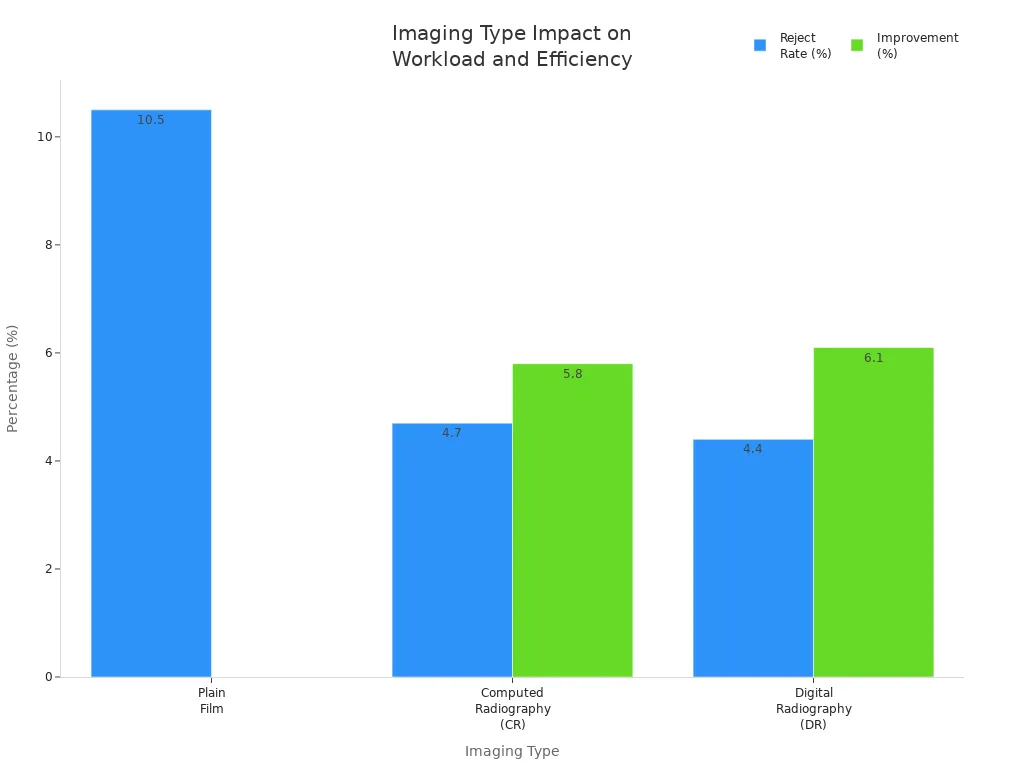
Digital x-ray systems have the lowest reject rate. This means you do not need to repeat scans as often. You save time and supplies.
You want your imaging tools to work with your clinic's software. Shinova's digital radiography systems connect easily to practice management systems. You can store, share, and look at x-ray images without extra steps. This makes your work faster and keeps patient records neat.
With digital imaging, you can send x-ray images to other vets or clinics in seconds. This helps you get advice from specialists quickly. It also helps you give better care to animals. Shinova's digital solutions make every step easier and faster for your clinic.
You want to know how much money you need to buy an x-ray system. A cr system usually costs less at the start than a digital radiography system. Many small clinics choose computed radiography because it is cheaper. You only need to buy the reader and cassettes. You can use your old x-ray machine with it. Digital radiography systems cost more at first. But you get faster results and work better. Big hospitals and busy clinics often pick digital imaging. It helps them save time and see more animals.
You have different ways to pay for new x-ray equipment. Here is a table that shows common ways clinics pay for these systems:
Financing Option | Key Features |
|---|---|
Veterinary Equipment Loans | Fixed interest rates, terms up to 84 months, full ownership at loan end, ideal for large investments. |
Equipment Leasing | Lower upfront costs, flexible terms, options to return or upgrade, often includes maintenance. |
SBA 7(a) and 504 Loans | Available up to $5 million, low down payments, long repayment terms, suitable for expansions. |
Veterinary-Specific Financing Providers | Tailored solutions, understanding of veterinary revenue cycles, examples include Bank of America. |
You can pick the way to pay that works best for your clinic. Leasing lets you start with less money right away. Loans help you own the equipment after you finish paying.
You want your x-ray system to work well every day. Maintenance for a cr system costs less at first. But you will need to buy new cassettes after some time. Digital radiography systems need less care. You do not have to handle plates as much. Shinova gives strong support for both computed radiography and digital radiography. You get help fast if something goes wrong. Shinova also gives long-term maintenance promises. You do not have to worry about fixing things.
Good support saves you money. You do not lose time if your system breaks. Your imaging tools keep working. Shinova's team helps with updates and answers your questions quickly. You can focus on your patients and growing your clinic.
Tip: Pick a company that gives clear maintenance plans and quick help. This keeps your x-ray equipment working well.
You can find a system that fits your budget. It does not matter if your clinic is small or big. Shinova's solutions help you get good imaging without surprise costs.
You want your staff to feel sure when using new equipment. Both computed radiography and digital systems have training programs. These programs help your team learn fast. With a cr system, your staff learns to use cassettes. They also learn to use the reader and process x-ray images. Digital systems teach your team to use panels and software. This gives instant results.
Training uses a step-by-step plan. You start with basic x-ray words and safety rules. Next, you learn how to position animals. You also learn to spot common mistakes. You practice using contrast and different study types. Here is a sample training schedule for veterinary staff:
Week | Session Title | Objectives |
|---|---|---|
1 | Getting Started- Understanding Radiographic Terminology, Production of X-rays, Image Processing and Developing a Technique Chart | Learn radiographic words, Explain how x-rays are made, Talk about image processing, Make a technique chart. |
2 | Radiation Safety | Talk about the ALARA Principle, Find radiation limits, Explain why chemical restraint and positioning tools help. |
3 | Identifying Digital Radiography Artifacts and Positioning for Thoracic, Abdominal and Pelvic Radiographic Studies | Find digital radiography artifacts, Show how to position for chest, belly, and hip studies, Fix bad positions. |
4 | The Use of Contrast in Radiography and Positioning for Vertebral Column, Forelimb and Hindlimb Radiographic Studies | Know contrast media, Show how to position for spine and limb studies, Fix bad positions. |
Shinova gives easy guides and quick help. You can ask for advice or help any time.
You want your daily work to go well. With a cr system, you move cassettes and scan them. You see the x-ray images on your computer. This is simple and does not take much effort. Digital systems make things even easier. You put the animal in place and press a button. You see the image in seconds. You do not need to handle plates or wait for processing.
Your staff spends less time on equipment. They spend more time helping animals. You can teach new team members quickly. Shinova's design helps everyone feel comfortable. Even new staff can use x-ray technology. You get clear instructions and helpful tips for every step.
Tip: Pick a system that fits your team's skill level. Easy use means fewer mistakes and better care for your patients.
You have a small animal clinic. You see cats, dogs, and sometimes exotic pets. You want imaging that fits your daily work. Many clinics like yours pick digital radiography. You get x-ray images in just a few seconds. This helps you see more patients each day. You do not wait for film or chemicals. You can store and share images with other vets easily.
Computed radiography is also good for small clinics. You use a cr system with cassettes and a reader. You save money at first. You can keep using your old x-ray table. You do not need to buy new equipment. If you see fewer animals or have less money, computed radiography works well.
Tip: Digital radiography is best if you want speed and easy sharing. Computed radiography is better if you want to save money and have more choices.
You help horses, cows, or other big animals. You need imaging that works for large patients and tough places. Digital radiography gives you fast results. You see x-ray images right away. You can check bones, joints, and lungs quickly. You do not need to use film or chemicals.
Here is a table that shows the good and bad sides of digital radiography for large animal clinics:
Benefits of Digital Radiography | Drawbacks of Digital Radiography |
|---|---|
Increased speed and efficiency in obtaining radiographs | High initial cost of equipment |
Immediate image preview without chemical processing | Risk of damage to expensive equipment |
Superior image quality with postprocessing | Need for user training and expertise |
Ability to archive and transmit images electronically | Security concerns regarding image storage and transmission |
You get clear pictures and save time. You can send images to experts for help. Your team needs to learn how to use the equipment. You must keep your digital panels safe in barns or fields.
Computed radiography also works for big animals. You use cassettes with your old x-ray table. You do not need to buy new equipment. You save money at first. You need room for the reader and cassettes. You wait a little longer for images.
Note: Shinova's imaging systems work well in barns, clinics, and outside. The equipment is strong and helps you with hard jobs.
You travel to farms, homes, or animal shelters. You need imaging that you can take with you. Both computed radiography and digital radiography work for mobile and mixed clinics. You can use your old x-ray table. You do not need to buy lots of new things.
A cr system uses cassettes and a reader. You carry the cassettes to each place. You do not need to change your x-ray generator. You set up the reader in your truck or mobile unit. You get digital images in about 20 to 40 seconds. You need space for the reader and must keep it safe from bumps and weather.
Digital radiography gives you images in just seconds. You use portable panels. You see x-ray images on your laptop or tablet. You can help animals faster. You need to keep your equipment safe when you travel.
Tip: Pick imaging that matches how you travel. Shinova's portable tools help you work in clinics, barns, and on the road.
You choose the system that fits your practice. You think about speed, cost, and how you work every day. Shinova gives you choices for every place you work.
You want to make the best decision for your veterinary practice. Start by asking yourself a few important questions. These will help you compare cr vs dr and see which system fits your needs.
What types of animals do you treat most often?
How many x-ray exams do you perform each week?
Do you need fast results for emergencies?
Is your clinic mobile, mixed, or fixed in one location?
What is your budget for new equipment?
How much space do you have for imaging tools?
Do you want easy sharing and storage of images?
How much training does your staff need?
Tip: Write down your answers. This will help you see which imaging system matches your workflow and goals.
You can move forward with confidence once you know your needs. Use this checklist to guide your next actions:
Review your answers to the key questions.
Compare cr vs dr systems based on speed, cost, and image quality.
Ask your team for feedback about daily workflow.
Schedule a demonstration with Shinova or another trusted provider.
Request information about maintenance and support plans.
Check if the system works with your current software.
Plan training for your staff.
Set a budget and explore financing options.
Step | Action Item | Why It Matters |
|---|---|---|
Demo | See the system in action | Understand real-world use |
Support | Ask about help and maintenance | Keep your system running well |
Integration | Check software compatibility | Smooth daily operations |
Note: Shinova offers expert advice and hands-on demonstrations. You can contact their team to see which imaging system fits your clinic best.
You have the tools to choose wisely. Take your time, ask questions, and reach out for support. The right x-ray system will help your practice grow and improve patient care.
Picking the right imaging system changes how you work each day and care for animals. Digital radiography is great for clinics that see many patients and need quick results. Computed radiography is better for smaller clinics with fewer cases or less money. You should pick the system that matches what you want and what you can spend. Many vets say they like digital radiography more because:
You see pictures sooner.
Your team can do their jobs faster.
Ask trusted companies like Shinova for help.
You use CR with cassettes and a reader. DR uses a digital panel that gives you images right away. DR works faster and fits busy clinics. CR costs less at first and works well for smaller clinics.
You can upgrade from CR to DR when your clinic grows. Many clinics start with CR and switch to DR for faster results. Shinova offers support to help you make the change smoothly.
You should follow the maintenance plan from your provider. Clean equipment often and check for updates. Shinova gives you fast support and clear instructions to keep your system running every day.
Yes, digital radiography uses less radiation than old film systems. You keep animals and staff safer. You also get clear images with lower exposure. Always follow safety rules for the best results.


